Domestic Supply Chains for Vaccine Manufacturing
Members: Amyris and University of California, Berkeley
Project dates: 2022 - 2026
This project helped create a domestic supply chain for key vaccine components that are currently sourced internationally from endangered or threatened sources. This project focused on two adjuvants – squalene and QS saponins – which are critical ingredients for vaccine effectiveness that enhance immune response.
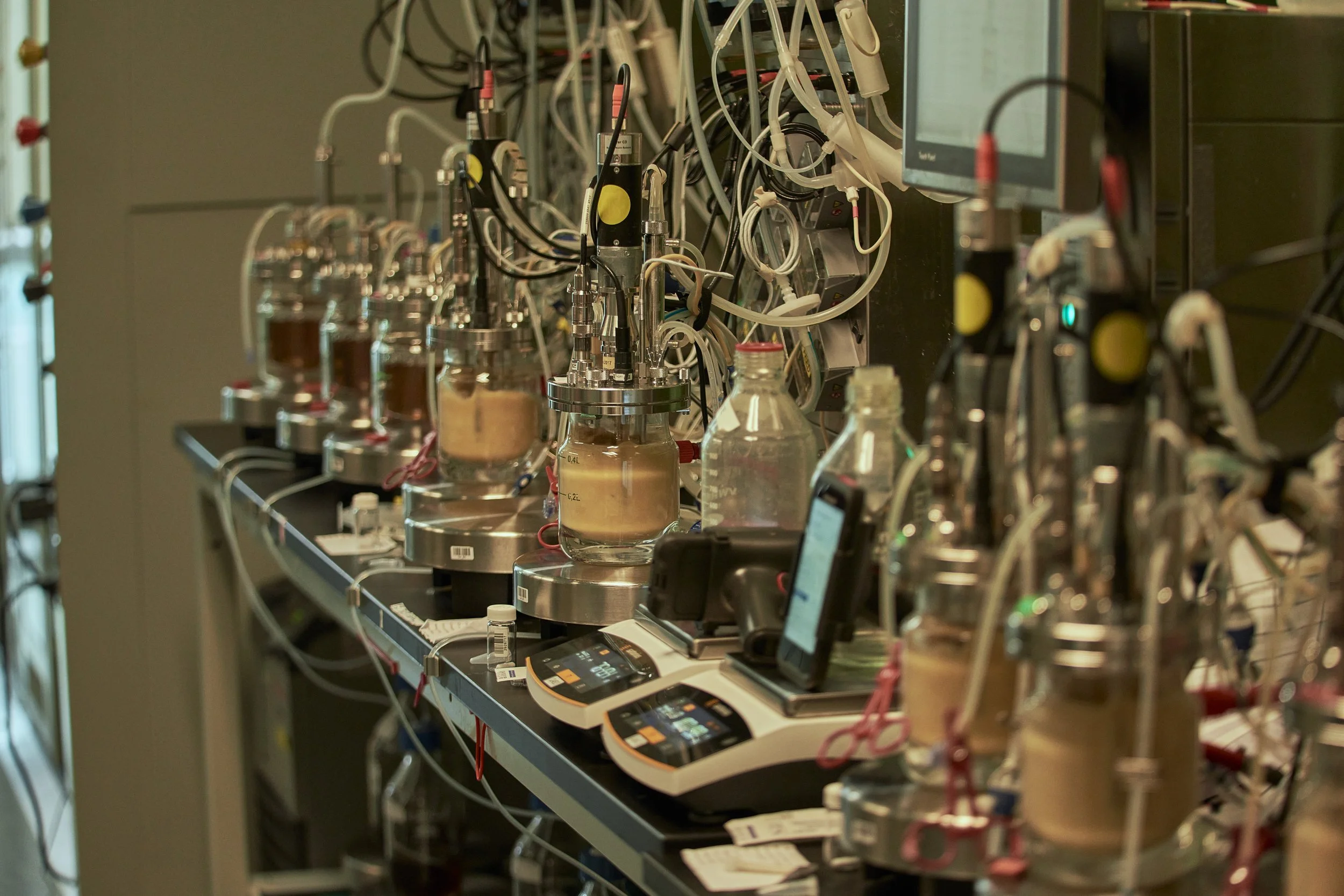
Through this project, Amyris built on its process to derive squalene via fermentation, instead of from deep ocean-derived shark sources. Production and purification of squalene was scaled up to 400 kilograms and provided to a commercial partner Croda for purification and evaluation in vaccine formulations. The team won an Edison award for their commercialization efforts.
Researchers at University of California, Berkeley conducted extensive analytical and process development studies, examining extracts from leafy material grown domestically to replace extracts that are currently sourced from Chilean tree bark. They found that the domestically grown plants provided a higher-yielding source of the needed saponins than the endangered, international source.
Finally, scientists engineered strains of yeast to produce adjuvant ingredients via fermentation. University of California, Berkeley researchers installed the framework for early-stage glycosylation to produce advanced intermediates that resulted in titers 4-5x higher than previously available. The team leveraged robotics and machine learning for high throughput screening to identify variants with improved enzyme activity.
Improving this technology at commercial scale simplifies supply chains, improves quality and consistency of material, eliminates reliance upon threatened and endangered species, and enhances U.S. readiness in case of acute future need. This will improve health care effectiveness and outcomes for warfighters experiencing new disease outbreaks around the world, as well as protecting everyday Americans.
Funding source: U.S. Department of Commerce