
Metabolic Engineering Workshop: July 27-28, 2026
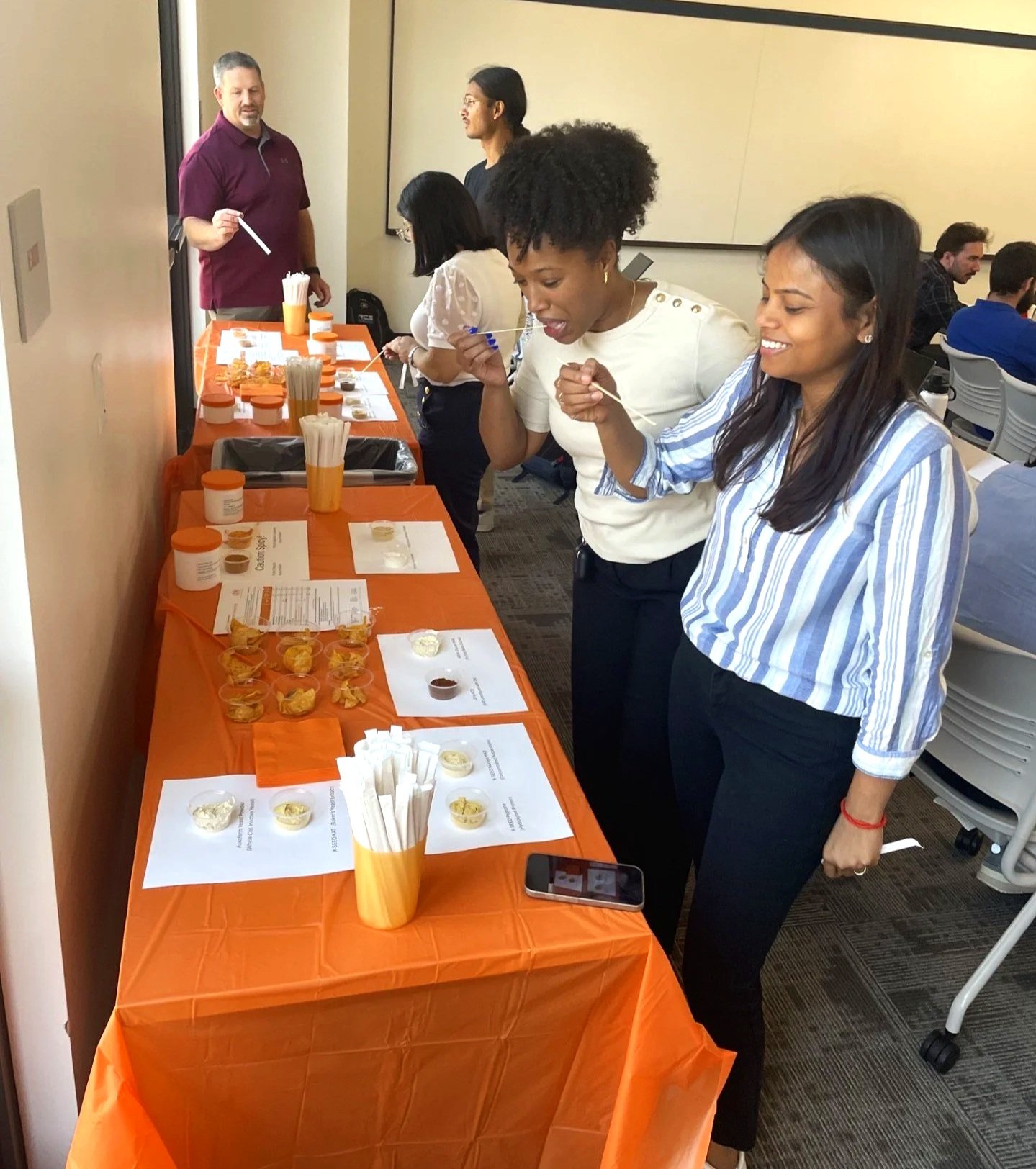
Join BioMADE for a deep dive into Metabolic Engineering! This interactive course is designed to equip you with the latest tools, techniques, and insights to accelerate your career in biomanufacturing. Register here!
Program Overview
This two-day course will focus on metabolic engineering as applied to high volume/low-cost chemicals and materials production, and the unique choices and approaches that work in this area. You’ll explore cutting-edge systems approaches with guidance from industry experts in biotechnology and biomanufacturing. You will:
Be able to immediately apply new tools and techniques directly to your organization's challenges.
Learn how to apply biotechnology and metabolic engineering in large-scale, industrial projects.
Survey the tools used in industrial biotechnology, and learn how systems approaches – in biology and engineering – interact to define and provide direction for experimentation.
Gain practical perspectives on the field from exposure to successful and unsuccessful endeavors.
Understand the interplay between biology, engineering, and economic requirements, and how theoretical and empirical approaches are used to move projects forward.
Who should attend?
At-the-bench metabolic engineers and individuals considering entering this area
Fermentation scientists, engineers, biochemists, bioinformaticians, and others who interact and work with metabolic engineering teams
Management personnel seeking to understand the unique context of industrial biotechnological projects
Agenda
Metabolic Engineering Overview; Rate-Titer-Yield
Microbial Physiology and Enzymology Overview
Genome Scale Metabolic Modeling & Strain Design
Building up biocatalysts: Modern Tools for Strain Engineering
Technoeconomic Modeling for Metabolic Engineers
How to Improve Decision Quality Throughout R&D
High-Throughput Screening: Insights from the Intersection of Metabolism, Statistics and AI
Metabolic Engineering Workflows and Automation - Establishing Automated Workflows in Synthetic Biology
State of the Art and Future of Automation Workflows in the AI Era
Evolutionary Engineering of Strains using Adaptive Laboratory Evolution
Rates
Two-day Metabolic Engineering Workshop:
Standard: $2,500
BioMADE members: $2,000
Educators: $1,750
Students: $625
Combine with the three-day Microbial Fermentation Workshop and save $500!
Includes daily lunch, networking receptions, all curricula, hands-on activities, and more
Event Details
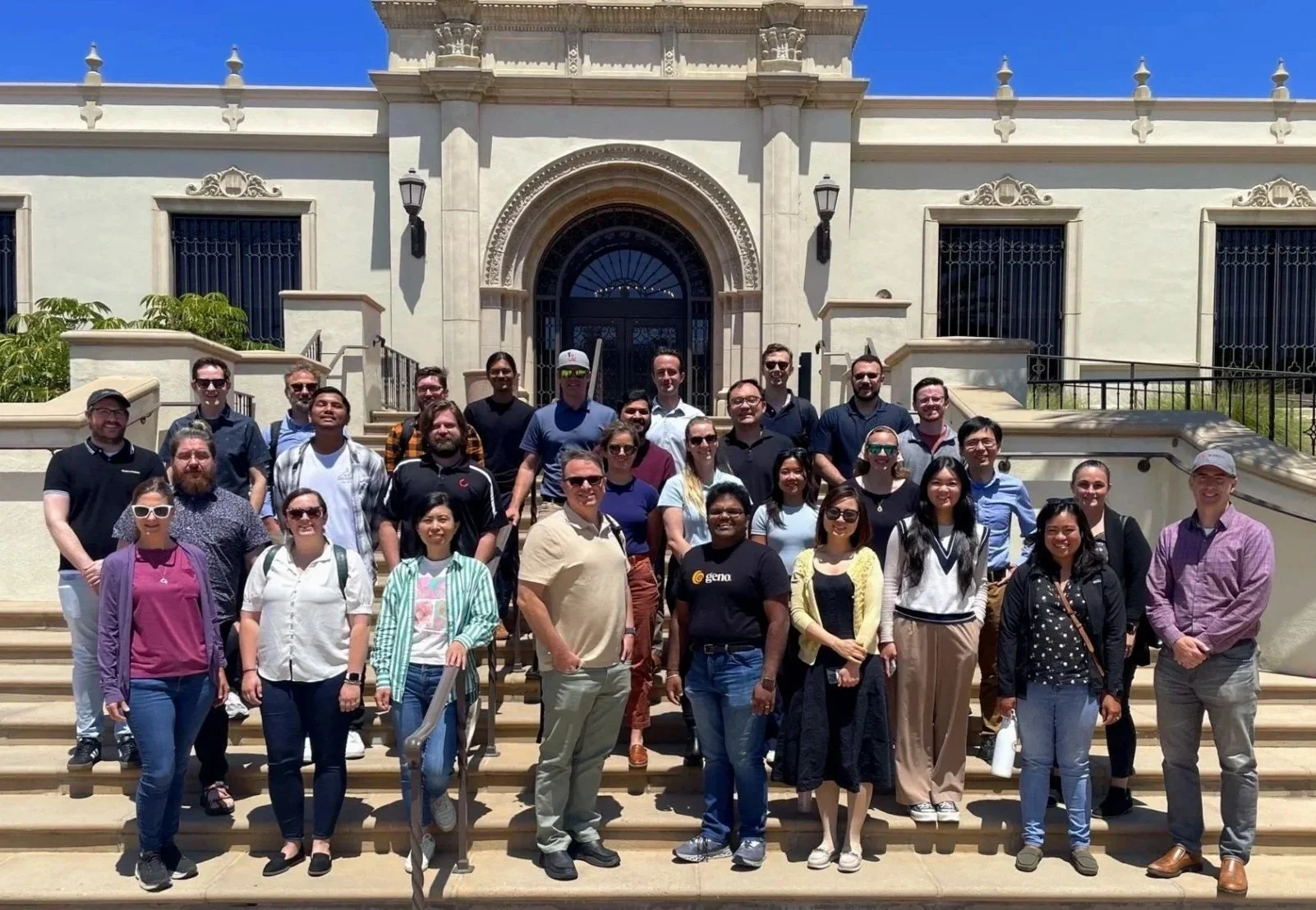
Location
University of San Diego
Pardee Legal Research Center (Room 132)
5998 Alcala Park
San Diego, CA 92110
Date and Time
Monday – Tuesday: 8:00 am – 5:00 pm
Hotel Room Block
Fairfield by Marriott Inn & Suites San Diego Old Town
Newly renovated
Walking distance to Old Town restaurants and shops
10 minutes from campus
Book your discounted rate of $219 by June 26 (includes breakfast).
Instructors
A world-class group of instructors from academia and industry will cover the agenda in an interactive format with case studies throughout. This course will be taught by:
-
-
Assistant Professor, Bioengineering
Shu Chien-Gene Lay Department of Bioengineering at the UC San Diego Jacobs School of EngineeringSystems Biology; Laboratory Automation; Adaptive Laboratory Evolution (ALE); Genome-Scale Modeling; Synthetic Biology; Metabolic Engineering; Biomanufacturing; Microbial Physiology
Feist’s research integrates automation, adaptive laboratory evolution (ALE), and computational systems biology to uncover and engineer emergent properties in microbial systems. He pioneered the development of automated ALE platforms, experimental evolution design, and mutation analysis and databasing, enabling high-throughput discovery of beneficial genetic variants and microbial phenotypes. His work in biological network reconstruction and analysis has advanced genome-scale modeling of metabolic networks, leading to predictive frameworks that connect genotype to phenotype. Rooted in quantitative biology and multi-dimensional measurements of microbial physiology and phenotypes, Feist’s research has advanced applications in biomanufacturing, metabolic engineering, and synthetic biology, including microbial production of sustainable fuels and chemicals, plastic upcycling, and engineering microbial systems for biomedical applications. By uniting automation with big-data analytics and model-driven design, Feist develops tools and strategies that accelerate strain optimization and bioprocess scale-up across industrial and biomedical domains.
Capsule Bio:
Adam M. Feist received his Ph.D. (2008) and M.S. (2005) in Bioengineering from UC San Diego and his B.S. in Chemical Engineering from the University of Nebraska–Lincoln (2003). Prior to joining the faculty, Feist served as a Research Scientist in the Systems Biology Research Group led by Bernhard Palsson at UC San Diego and as a Senior Researcher at DTU Biosustain at the Technical University of Denmark, where he led interdisciplinary efforts in adaptive laboratory evolution, laboratory automation, and genome-scale modeling. He also has two years of industry experience at a startup commercializing genome-scale modeling applications in biomanufacturing and healthcare.
Feist has authored more than 120 peer-reviewed publications, holds multiple patents, and has been consistently ranked among the Top 2% of most cited researchers worldwide by PLOS Biology. His honors include the Jay Bailey Young Investigator Award in Metabolic Engineering (2018) and the Jacobs School of Engineering Woolley Award and Fellowship for Leadership during his graduate studies at UC San Diego. His research has been supported by the U.S. Department of Energy, the National Institutes of Health, and the Novo Nordisk Foundation. In addition to his research leadership, Feist is an experienced mentor, having advised numerous Ph.D. and M.S. students, postdoctoral scholars, and early-career researchers.
-
Andrew Garst, Ph.D. is a synthetic biologist and entrepreneur currently serving as a Research Fellow at Manus, where he works on genome and metabolic engineering for biomanufacturing. He is a co-inventor of CREATE (CRISPR-Enabled Trackable genome Engineering), a multiplexed, genome-scale editing technology he developed as co-founder and Principal Scientist at Inscripta, which raised over $500M in venture funding and reached a valuation above $1B. He later co-founded Infinome Biosciences and served as its Chief Innovation Officer, building combinatorial genome editing platforms for strain development. Andrew earned his Ph.D. in Biochemistry from the University of Colorado Boulder, with early training in RNA structural biology and biophysics. His research has been cited more than 4,700 times (h-index 38), and he is named as an inventor on over 100 issued patents covering CRISPR genome engineering, nuclease engineering, and RNA-based regulation.
-
Dr. Ali Khodayari is an industrial biotechnology leader focused on translating scientific innovation into scalable chemical production. During his tenure leading Rational Strain Design at Genomatica, he developed novel computational workflows to systematically optimize biological systems. In this course, he will highlight how Genomatica applies these data-driven modeling approaches to develop robust cell factories, featuring case studies from their C4 and C6 platforms.
-
Dr. Russell Komor is the director of biochemistry at Cellibre, where he oversees the team responsible for the discovery, characterization, and engineering of diverse enzymes. Prior to joining Cellibre, Dr. Komor worked at Genomatica and Synthetic Genomics, where he focused on using structural modeling and computational tools for protein discovery and engineering across numerous projects. Dr. Komor earned his PhD and MS in Chemical Engineering from Caltech with Nobel laureate Dr. Frances Arnold and his BS in Chemical Engineering from UC Berkeley.
-
Michael is a veteran of the industrial biotechnology sector leading development, scale-up, and commercialization of novel processes for the production of chemicals via fermentation. He has been with Genomatica since 2008 and currently leads their Process Technology & Engineering department. Prior to Genomatica, he held several R&D and operations positions at NatureWorks LLC.
Michael holds a bachelor’s degree in chemical engineering from the University of Minnesota.
-
Harish has been at Geno since 2013 and currently serves as the Senior Director of Systems Bioengineering and Head of Cell Factory Development at Geno. Harish leads all disciplines associated with cell factory development including computational modeling, data science, strain engineering, synthetic biology and experimental systems biology platform for strain evaluation and physiological characterization. Harish is a recipient of the two EPA Green Chemistry awards for Geno’s bio-based butylene glycol process and Geno’s fatty alcohols process, and has been recognized by the National Academy of Engineering’s and selected as one of the Innovative Young Engineers in the National Academy of Engineering’s 2019 U.S. Frontiers of Engineering Symposium
Harish holds a Bachelors in Biotechnology from the Indian Institute of Technology Madras, India and a Ph.D. from University of California, San Diego.
-
Tom is the Chief Executive Officer and co-founder of R2DIO, Inc. His inspiration to create R2DIO was his longstanding experience working in life sciences laboratories and observing the challenges that R&D professionals face in achieving reproducible results from their experiments. In response to these challenges, he developed an approach to making more reproducible measurements, designing more efficient experiments, and scaling operations with greater predictability. This approach, which is based on proven statistical process control methodologies, became the basis for R2DIO’s solutions.
Before co-founding R2DIO, he was a leading scientific and statistical consultant to the industrial biotechnology sector, advising companies ranging in size from startups to Fortune 500 enterprises. Since 2021, he has served as a guest lecturer at the University of California Berkeley, where he teaches a curriculum to students in the school’s Master of Bioprocess Engineering program. Highlights of his previous industry experience include roles at Zymergen, where he was the company’s first Director of Test Operations, and at Amyris, where he served as a Principal Quality Engineer and Senior Scientist. Prior to his career in industry, Tom developed innovative, high-throughput screening methods as a post-doctoral protein engineer at Caltech, earned a Ph.D. in Biophysical Chemistry at Stanford, and earned a combined B.S./M.S. degree in Chemical Physics at Yale. -
Chiam Yu is a Computational Biologist at A-Life (Google X), where she leads the development of deep learning platforms and biological foundation models to predict and design microbial cells. Previously, during her four years at Amyris, she built the algorithms, data infrastructure, and scientific software to accelerate the industrial development of microbial strains for multiple products, and contributed to the DARPA Living Foundries: 1000 Molecules project. With a decade of industry experience, Chiam Yu bridges modern machine learning with core systems biology techniques to build scalable computational solutions for biomanufacturing. She holds a Ph.D. in Chemical Engineering from The Pennsylvania State University.